

Skip to content
Integration & data services

Your systems should agree with each other

Most hotels don’t have a software problem. They have a “systems that don’t talk to each other” problem, and it shows up as manually re-typed data, missed charges, and numbers that arrive after the decision.

We connect what you already have. Whether your PMS is five months old or fifteen years old.

SCATTEREDPMSPOSCRMBOOKSSOLERA LAYERCONNECTEDONE GUEST RECORDONE SET OF NUMBERSONE VERSION OF TODAY
Of gross revenue gone to rate parity mismatches, manual errors, and double bookings
3–8%
Of revenue foregone because you can’t price dynamically when demand spikes
10–15%
Total annual loss in revenue, before OTA commissions
10–18%
Why this comes first

AI can’t help a hotel whose systems’ data don’t agree.

Every hotel is looking to adopt and scale AI right now — for pricing, for messaging, for guest service. Almost none of it works on a property where the booking in the PMS, the charge in the POS and the guest in the CRM are three unrelated records.

AI is only as good as the data underneath it. Connecting your systems isn’t a step before the interesting work. It is the work that makes everything after it possible.

What this actually looks like

We understand your challenges

Disconnected systems don’t fail loudly. They just quietly add stress to everyone.

General Manager

You look into 3 systems for the same information and get 3 answers. Meanwhile the people you hired to look after guests spend their morning copying numbers between screens.

Every fix means another vendor call, and nobody owns the gap that exists.

1 in 4

hotels has nobody responsible for connecting systems

RMS / RoomPriceGenie, 2026

Wherever you’re starting from

Two starting points. Both of them work.

The most common reason a hotel does nothing is the belief that fixing this means replacing the PMS first. It doesn’t.

  • Modern & cloud-based

    You already have the hard part.

    If you run
    • Mews
    • Cloudbeds
    • Apaleo
    • Amenitiz

    What’s missing is usually small and specific: the local tool that was never in the app store, the alert nobody built, the charge that never reaches the folio, the filing still done by hand.

    These are gaps, not rebuilds. We close them in weeks.

    Typically live in
    2–6weeks
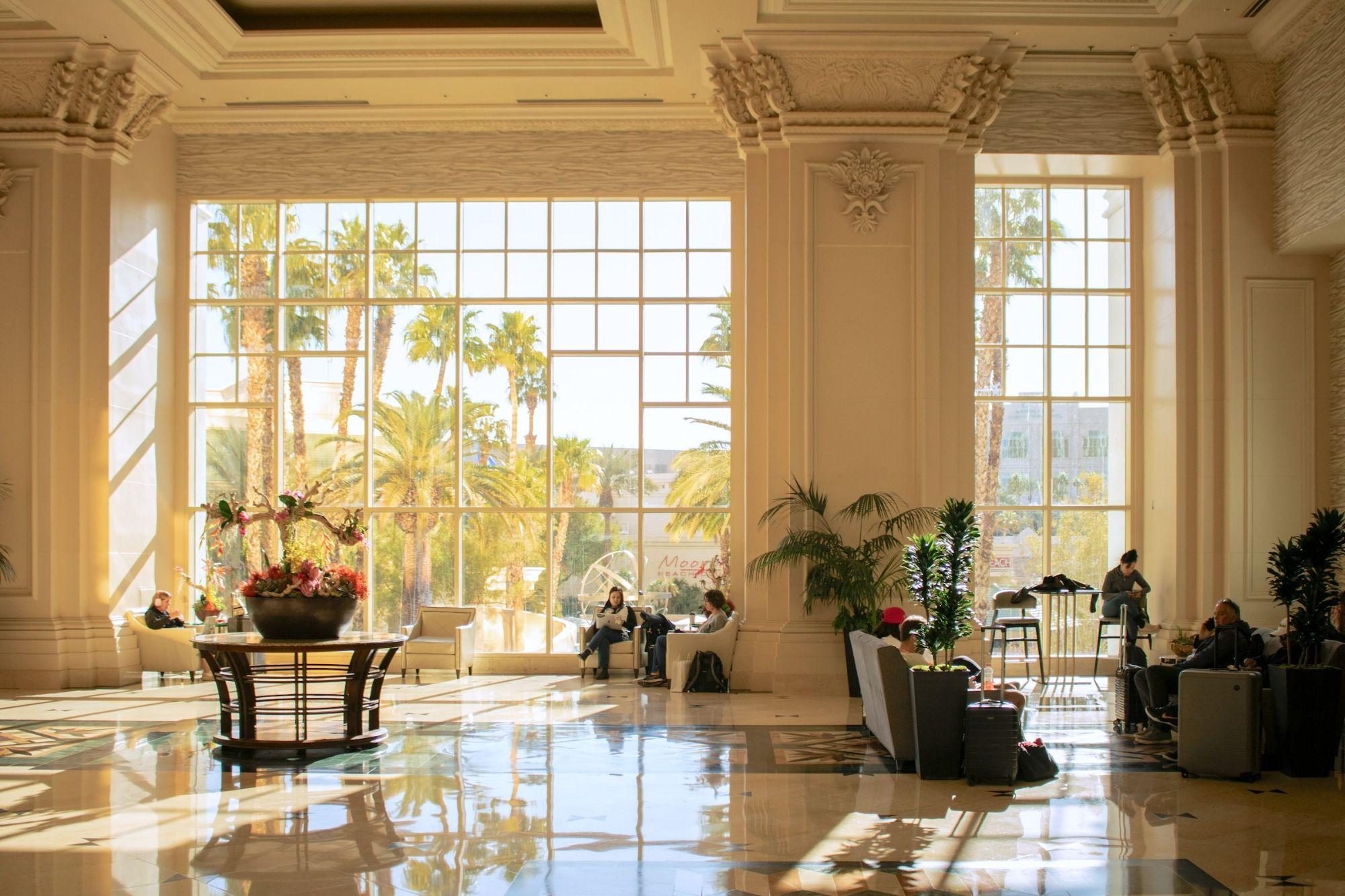
  • On a server in the back office

    You don’t have to replace it to move forward.

    If you run
    • Opera 5
    • Fidelio Suite8
    • SIHOT
    • Newhotel
    • Noray
    • Winhotel
    • Protel

    We build a secure bridge from that server to modern tools — online check-in, pre-arrival upsells, a guest database you actually own — while the system your team knows stays exactly where it is.

    Migrate later, on your timetable, from a much safer position.

    First guest-facing result in
    8–16weeks

Same destination — one guest record, one set of numbers

What we build

Four kinds of work

  • 01 · Real-time data

    Systems that react in real time

    A VIP checks in and the duty manager’s phone knows. A late checkout is sold and housekeeping sees it. A group cancels inside seven days and revenue finds out that afternoon, not that month.

  • 02 · Sync

    One booking seen the same everywhere

    A single change reaches accounting, the CRM, the door locks and the upsell engine at once — each in the shape it needs, with tax handled properly and nothing quietly failing in the background.

  • 03 · Legacy PMS

    A bridge from your server to the cloud

    Keep the PMS your team knows. Add online check-in, pre-arrival upselling and a guest database that lives somewhere you control — without a migration, and without a shoulder season spent in crisis.

  • 04 · Groups & multi-site

    One guest, one profile, every property

    Three hotels on three systems become one guest database — so the guest who stays in Marbella in June is recognised in Tenerife in October, and the group can finally market as a group.

What changes

Where it shows up

Integration work is invisible by nature. These are the five places it stops being invisible.

  • Revenue

    3×

    more likely to buy an upgrade after a digital check-in, with charges on the folio before the guest leaves

  • Operations

    500–900

    hours a year returned to your team, once manual filing, re-keying and reconciliation stop

  • Compliance

    €30,000

    in non-compliance fines avoided — traveller data files itself to SES.HOSPEDAJES inside the window, with a timestamped record

  • Marketing

    €9.85

    in revenue per correctly captured email address, in one clean guest database you own

  • Strategy

    Reversible

    vendor decisions — change PMS, CRM or revenue system without rebuilding everything around it

Why us

Enterprise systems experience, pointed at hotels.

  • We’ve done this at scale before

    Hundreds of projects of enterprise hybrid integration work at Software AG (now part of IBM) and cloud projects at Microsoft, now applied to hospitality.

  • Spanish compliance is built in

    RD 933/2021, GDPR and LOPDGDD are designed into the data flow from the start. Retrofitting compliance is the most expensive route to the same place.

  • We find the right balance

    Where a proven connector already exists, we recommend it and negotiate it. We only build what genuinely needs building — and we tell you which is which.

Engagement

How we work

The first two phases produce a decision, not a build. If the numbers don’t justify the work, we say so.

  1. 01

    Map the processes

    Every system you run, everything it can and can’t share, and every manual step currently holding it together.

  2. 02

    Find the gaps

    What each gap costs in hours and euros a year. This is where most hotels see the real number for the first time.

  3. 03

    Set the objectives

    Priorities, sequence and what we deliberately leave alone. Buy the connector where buying is right; build only where it isn’t.

  4. 04

    Build the solution

    Built, tested alongside your current process, and signed off by your own team before anything manual stops.

  5. 05

    Report the impact

    What it moved, checked periodically. Documented and handed over.

FAQ

Frequently asked questions

No. If your PMS runs on a server in the back office, we build a secure bridge to modern cloud tools and leave it exactly where it is. You get online check-in, upselling and a guest database without a migration. You can migrate your PMS later, on your own timetable.

A connectivity audit takes about two weeks. Work on a modern cloud PMS is usually live in two to six weeks. Bridging a legacy on-premise system to cloud tools takes eight to sixteen weeks to first guest-facing result.

Guest data stays in the EU, under agreements written for GDPR and LOPDGDD. We minimise what each system receives — your CRM never needs card or financial detail — and we assess payment-data exposure before anything is connected.

Every automation workflow we build checks itself and raises a visible alert when it fails. The dangerous failure isn’t the loud one — it’s filings quietly not sending for six weeks. Daily reconciliation is part of what we hand over, not an extra.

Everything is documented, version-controlled and handed over with a written runbook and a named owner. We can run it for you on a retainer, but you are never locked into us to keep your own hotel working.

Free audit

Start with a connectivity audit.

Two weeks. We map every system you run, every manual step between them, and what each gap costs you in hours and euros a year.